This is wine

Wine Marvels

Je m'emerveille.

In French you don't just marvel. You marvel yourself. And the opposite: you bore yourself. Je m'ennuie. That's what this page is for.

One marvel at a time. Mostly wine, sometimes not, always something that stopped me in my tracks. When it isn't wine, I'll walk it back to the glass.

By Jeff Harding

Marvel no. four

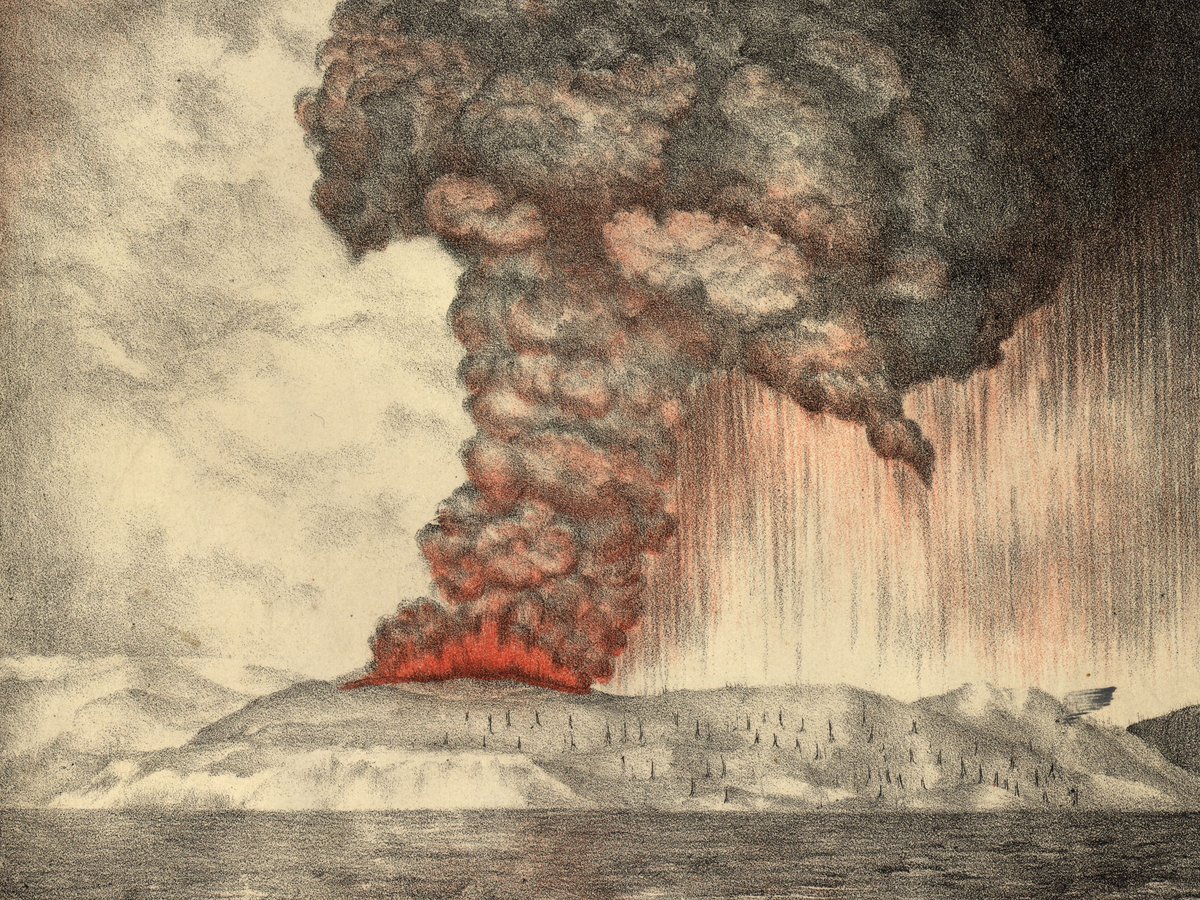
The Loudest Sound Ever Recorded

Krakatoa, August 27, 1883

The loudest sound ever recorded has no recording. When Krakatoa blew in 1883, nobody had a machine that could catch it. "Recorded" means written down, and that's the part I love.

Ship captains logged it. Telegraph clerks wired it. A pressure gauge at a gasworks in Batavia, 100 miles away, jumped high enough that it works out to about 172 decibels, louder than standing next to a jet engine. People 3,000 miles away on the island of Rodrigues heard it like distant guns. Then the pressure wave went around the planet three to four times each way over five days, and barometers everywhere caught it while nobody heard a thing.

Back to the glass

Most of the great old wines are like Krakatoa now. Nobody alive has tasted them, and all we have is what someone wrote down. So what's interesting isn't only the wine, it's the record of it. The way people write about tasting has changed over the centuries, and an old tasting note tells you as much about the taster as the bottle. Pascaline Lepeltier's book One Thousand Vines has me thinking about this.

More on this one to come.

Read the story at Moss and Fog
Marvel no. three

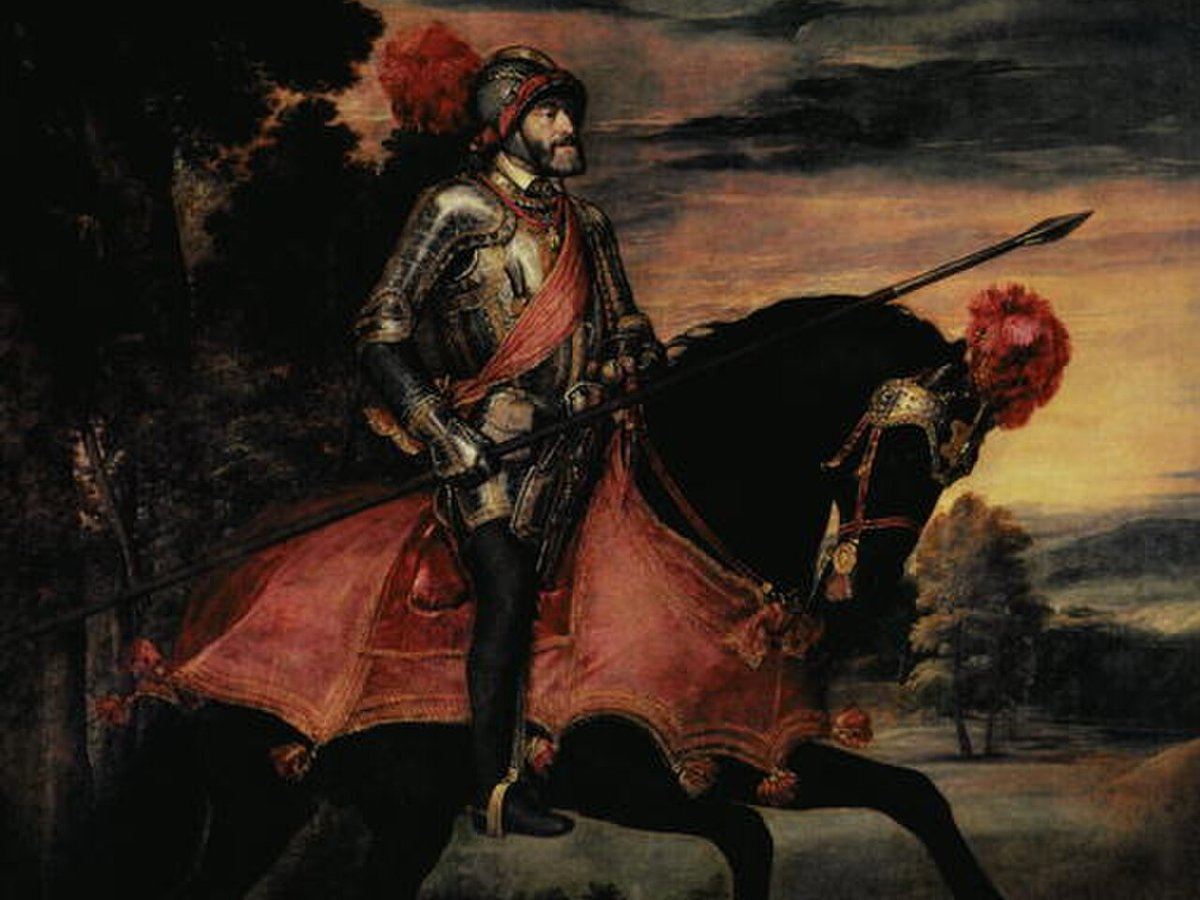
The Emperor Who Rehearsed His Own Funeral

Bomba Flamenca, La Tempete with Simon-Pierre Bestion, on Alpha

In 1558, two years after giving up his crown and retiring to the monastery of Yuste, Emperor Charles V is said to have organized his own funeral while he was still alive. A few weeks later he died for real. Some historians doubt it ever happened, but it's too good a story to let go.

The French ensemble La Tempete and conductor Simon-Pierre Bestion built an "imaginary Requiem" around it, Bomba Flamenca, mixing Morales, Janequin, and Mateo Flecha with flamenco singing. Start with Flecha's "El fuego," one of his ensaladas (salads): a fire breaks out, everybody yells for water, and the fire turns out to be sin. It's sacred, chaotic, and funny all at once.

The cover looks like the Rocio pilgrimage: oxen hauling a silver cart covered in flowers across the dunes of Donana. A funeral cortege and a fiesta in one image.

Back to the glass

Manzanilla. Sanlucar de Barrameda sits right across the river from Donana, where the pilgrims cross. Salty, bright, and a little bit funereal in its bone-dry way.

Read about Bomba Flamenca

Sources:

Marvel no. two

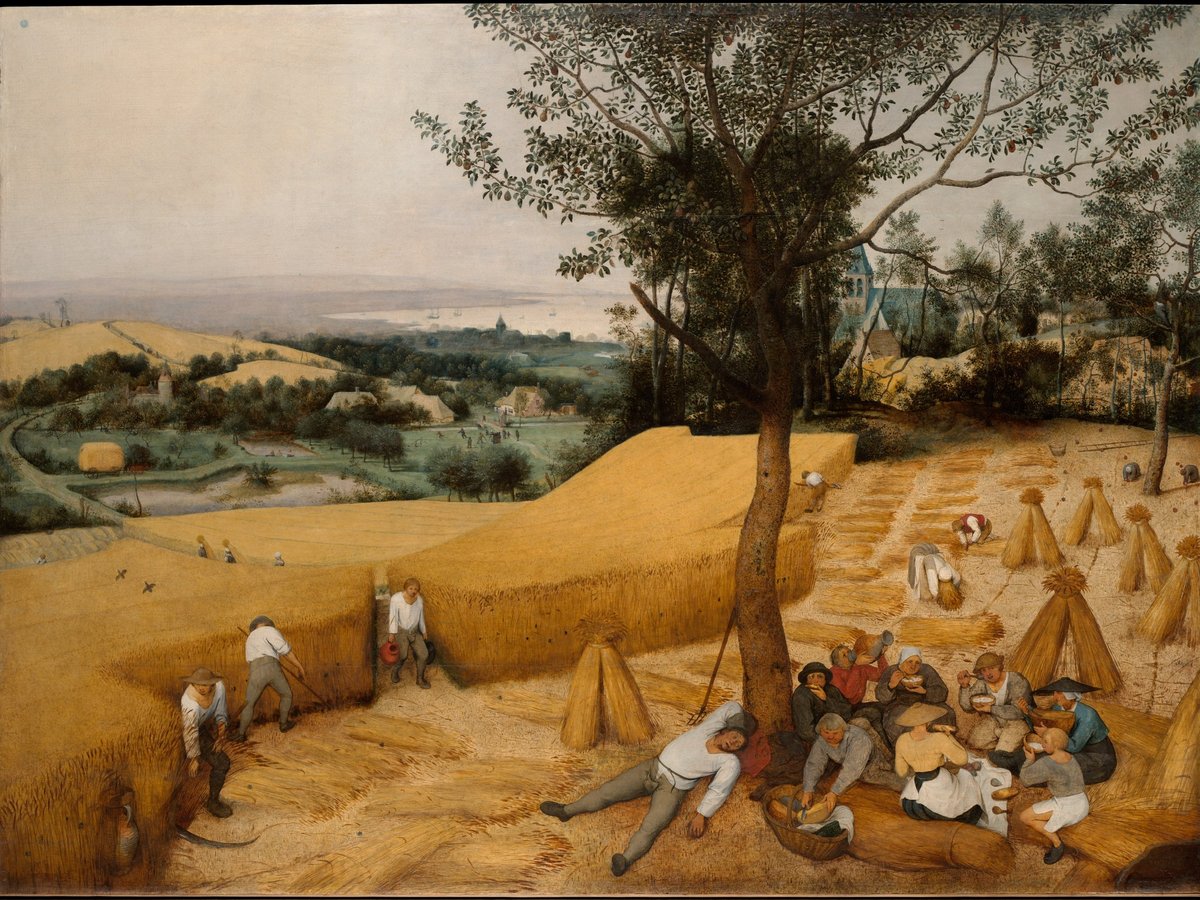
The Harvesters

Pieter Bruegel the Elder, 1565, oil on oak

I saw this one on Thanksgiving, which feels right. A golden wheat field in high summer. Some of the workers are still cutting with scythes, some are hauling sheaves, and a bunch of them have quit for lunch under a tree, sprawled out in the shade. One guy is flat on his back, asleep.

Bruegel painted it as one of six seasons for an Antwerp merchant's country house, to hang in the dining room. So it was made to be looked at while eating. It's also one of the first landscapes painted for its own sake, not as a backdrop for some saint. The Met bought it in 1919, while the art market was still reeling from the war.

Back to the glass

Look at what they're eating: bread, bowls of porridge, and a woman cutting slices off a giant wheel of cheese. That's the whole meal. Grain and milk, from the field they're standing in.

That's the oldest pairing there is, and it doesn't want anything fancy. Bread and cheese in the heat of harvest want something cold, plain, and a little sour: a farmhouse white, a cider, a glass of whatever the people who grew it drink at lunch. And when the pie comes out tonight, put a wedge of that cheese next to it and pour something sweet.

See The Harvesters at the Met

Marvel no. one

Body and Soul

Coleman Hawkins, New York, October 11, 1939

Coleman Hawkins walked into a New York studio in the fall of 1939 and recorded a ballad everybody already knew. Then he barely played it. From the first bar he took Johnny Green's chords and improvised around the melody, hinting at it and never quite handing it over, for three minutes straight. Nobody had put anything like that on a record. And it was a hit.

He'd been using it as his encore all over Europe for years before he came home and cut it. Hawkins is the guy who turned the tenor sax into a jazz instrument in the first place, and this is the record that proved it. The Library of Congress put it in the National Recording Registry in 2004.

I played saxophone for a long time. This is the record that makes sax players go quiet.

"'Body and Soul' is a masterpiece. It still is, will always be."Sonny Rollins

Listen to the 1939 recording at the UC Santa Barbara Discography of American Historical Recordings.

Back to the glass

Here's where it comes home to wine. On my wine circle of fifths, every key has a sign and a pour. Body and Soul lives in D-flat, which on the wheel is Scorpio.

Every A section of the song comes home the same way: E-flat minor, then A-flat, then D-flat. Each chord falls a fifth, so that's three steps counterclockwise around the circle, Capricorn to Sagittarius to Scorpio. That's the circle of fifths doing what it does best, pulling you home.

Then the bridge. Green jumps up a half step to D. On the piano that's the next key over. On the wheel it's five keys away, nearly straight across, Scorpio to Gemini. Then he drops a whole step to C, Aries, the very top of the wheel, and slides back to D-flat for the last eight bars. People have called it a bridge like no other, and Hawkins sailed right through it.

So try it with your glass. Open the wheel, find D-flat, D, and C, and drink the bridge.

Open the wine circle of fifths

Green: the A sections, falling by fifths to D-flat. Red: the bridge, jumping across to D, then C, then home.

Wine Marvels